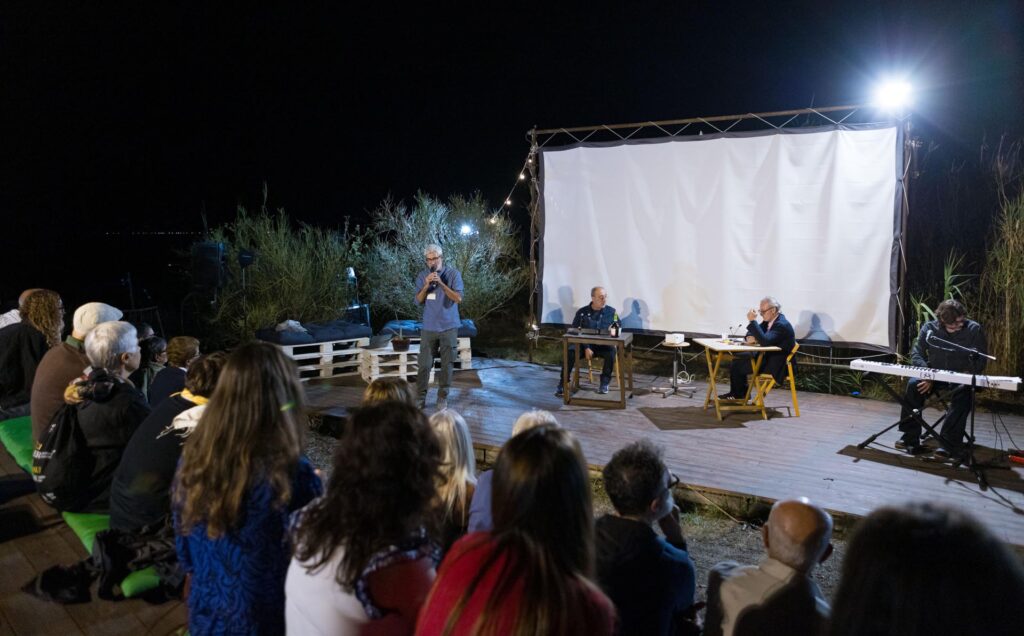
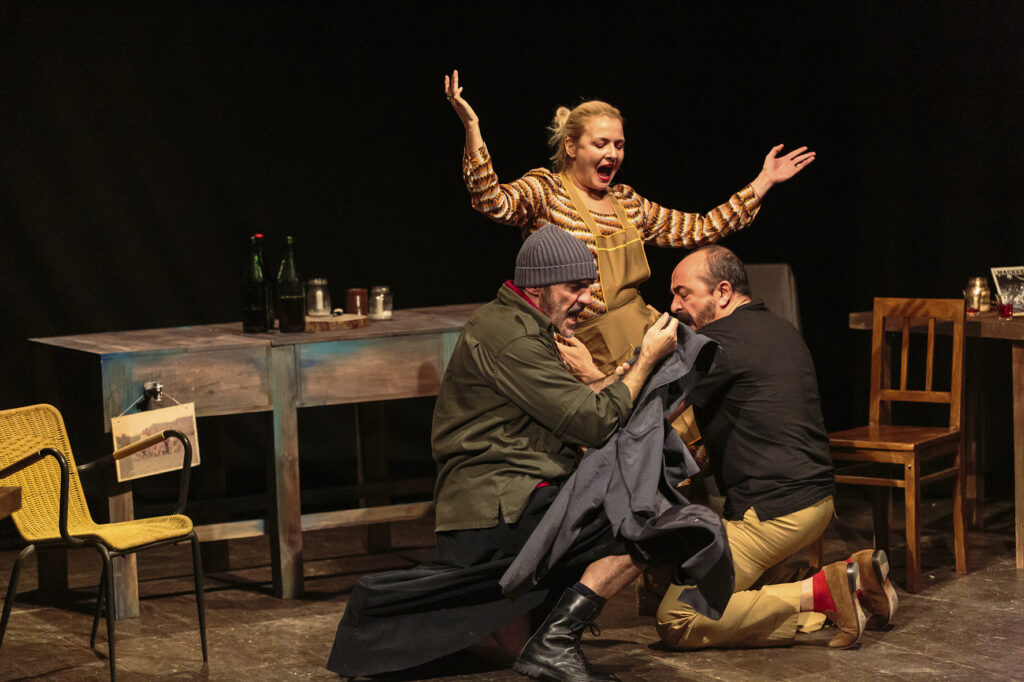
Founded in 1995 within the realm of new dramaturgy and social theatre, Mana Chuma, “Mother Earth” in Grecanic – the ancient Greek language of Calabria is directed by Massimo Barilla and Salvatore Arena with the crucial collaboration of composer and sound designer Luigi Polimeni and stage designer Aldo Zucco. From the outset, the company has dedicated its work to reclaiming the historical and cultural identity of southern Italy. Combining stories, figures, and styles drawn from local tradition with innovative artistic forms, the company weaves a poetic fusion of diverse languages.
Today, Mana Chuma is much more than a theatre company. While it pursues its commitment to exploring forgotten stories and innovative languages – conducting distinctive research on space and experimenting with new, unexpected settings for theatre – it is also increasingly defining itself as a key player in the socio-cultural processes of the territories where it operates with continuity.
The multifaceted work of Mana Chuma as a cultural enterprise revolves around the following elements:
– It is recognised by the Ministry of Culture under the “Fondo Nazionale Spettacolo dal vivo” (National Live Performance Fund) as a theatre production company dedicated to research and innovation, and by the Calabria Region (ranking first at the regional level in both evaluation and allocated resources over the past three years);
– Over the past five years, in addition to receiving numerous prestigious awards (including the National Critics’ Prize), it has toured with its productions across the world, (the Italian Cultural Institutes in Paris and Valletta, festivals in New York and Bitola in North Macedonia, as well as in Tunis, Cologne etc.).
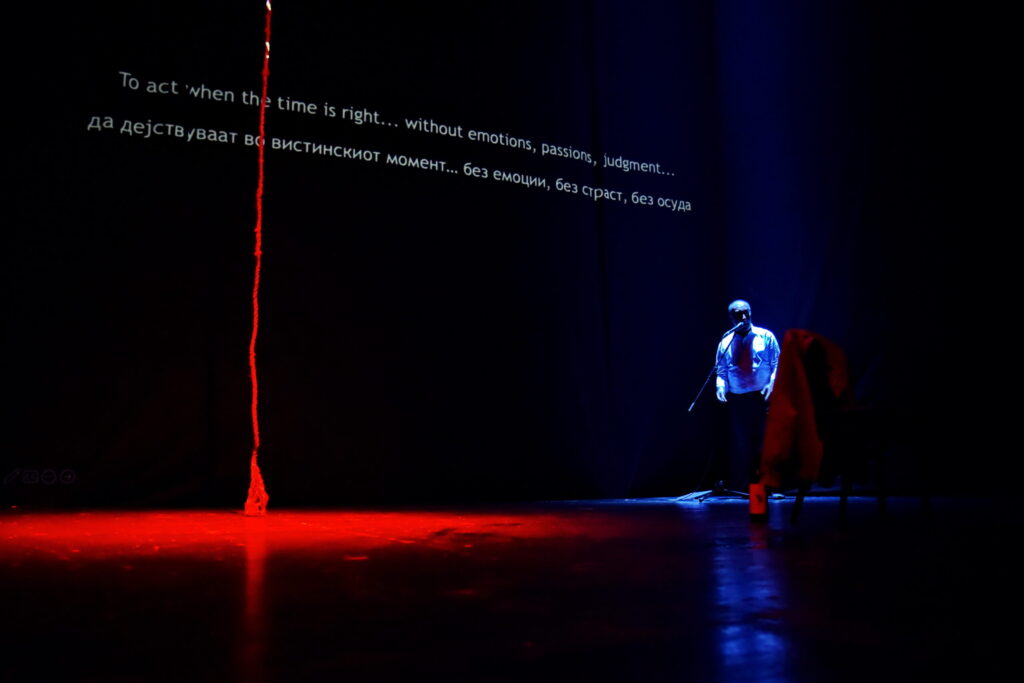
– Each year, it stages around 100 performances of its own productions across Italy, covering 12 to 13 regions and more than 50 municipalities.
– Its dramaturgical and poetic works have been translated and published in various forms in France, Spain, Latin America, India, Malta, Cairo, Iceland, and North Macedonia (with the support of the Italian Embassy).
– It is a member of leading national and international cultural networks (IETM, Rete Latitudini) and is one of the eight Italian members of the International Theatre Institute – UNESCO.
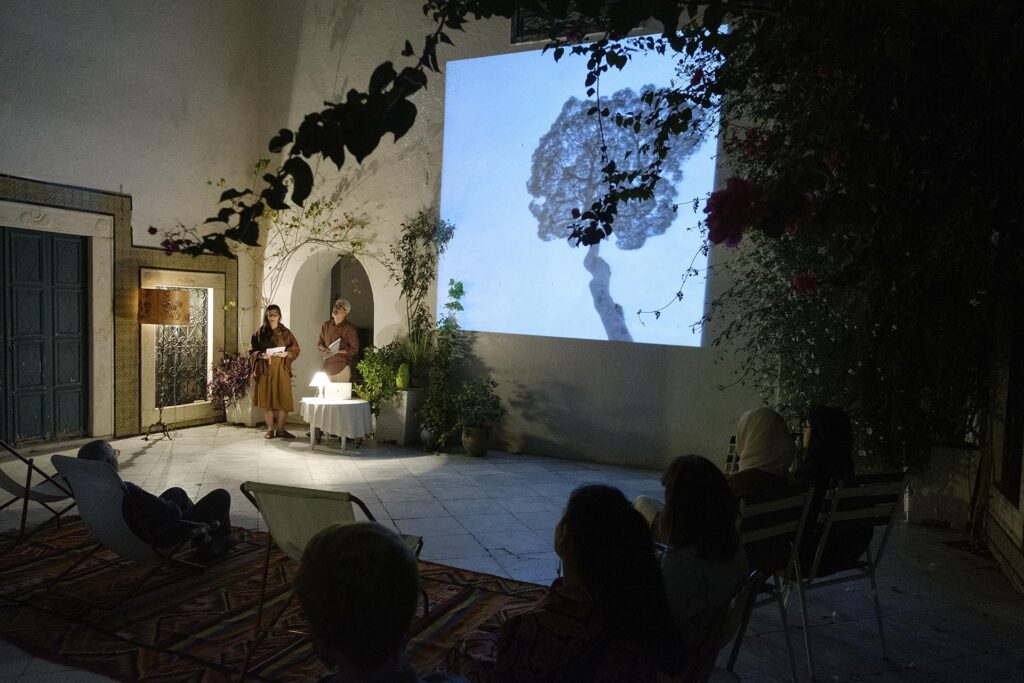
– It attracts young creative talents from across the Mediterranean, as demonstrated by the Med Youth Meeting organised by Jeunesses Med and the Réseau Euromed France in collaboration with Mana Chuma Teatro in June 2024, bringing together around 70 young people from 17 countries to Reggio Calabria.
– It collaborates on an ongoing basis through formal agreements with many of the most important institutional and cultural actors at the local level, including the National Archaeological Museum of Reggio Calabria (MArRC), the Archaeological Park of Locri, the Mediterranea University of Reggio Calabria, the Ministry of Justice, the Biennale dello Stretto, and the professional orders of lawyers and landscape architects of Reggio Calabria.
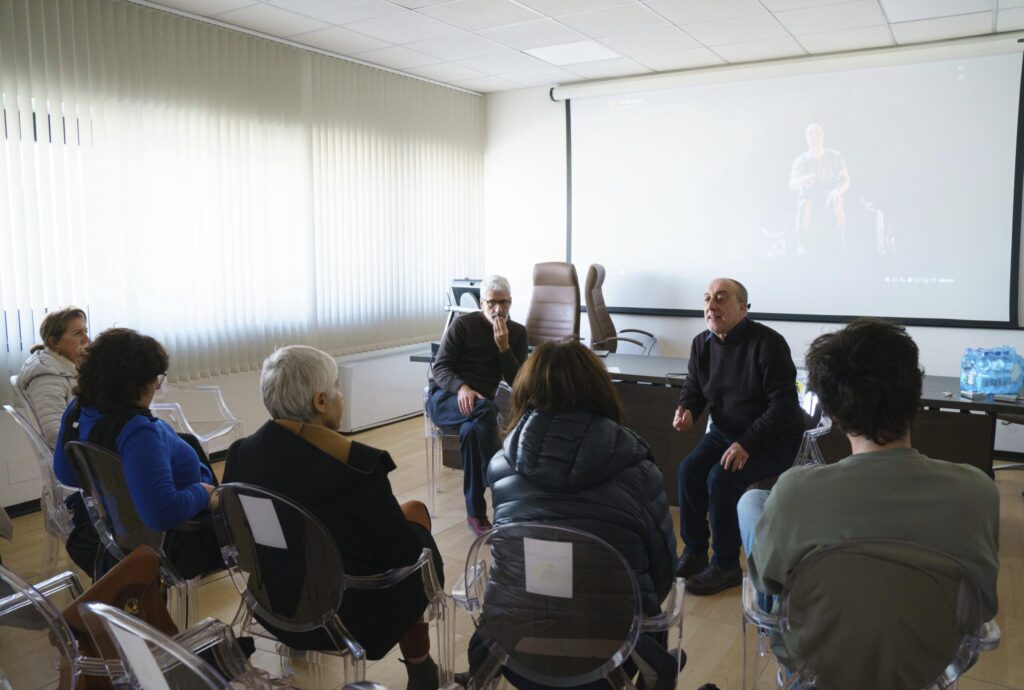
– It boasts a multidisciplinary artistic core with international recognition and has communication channels (website, newsletter, social media) in three languages—Italian, English, and French—reaching around 100,000 contacts per year, approximately 30% of which come from abroad.
– It develops innovative technological prototypes for the performing arts and the enhancement of cultural heritage.
– Committed to new cultural models that place the ecological transition at their core, it is the only cultural enterprise from Calabria selected by Fondazione con il Sud for the international SOFIGREEN (Social Finance for Social Greening) programme co-funded by the European Commission, currently underway in Italy, France, and Spain.
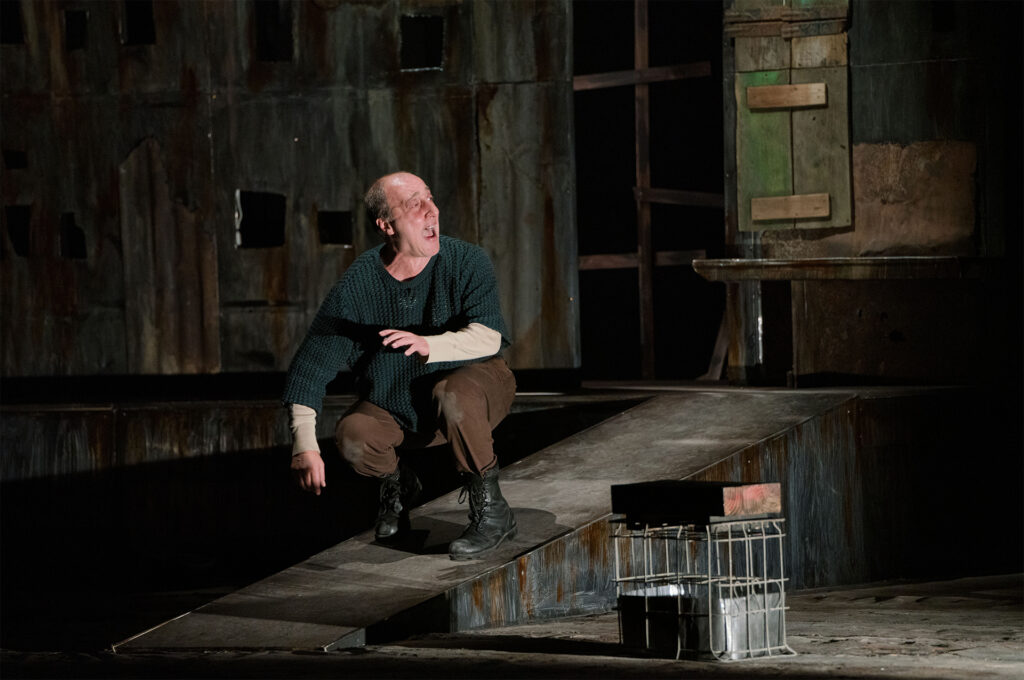
– It layers memory through historical and documentary archives on the city’s historical and anthropological heritage (for instance, the theatrical work on the Revolt, ’70voltesud’, which was used by Rai Storia for a monographic episode on the subject).
– The opening of a green cultural hub in Reggio Calabria dedicated to the performing arts, research, and innovation in 2025-26.